
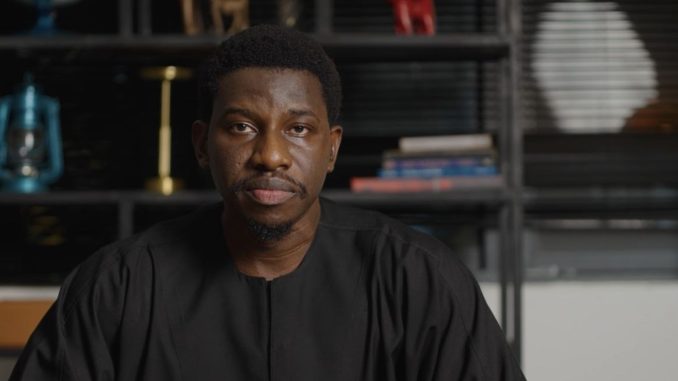
An address to the people of South Africa By Steven Odarteifio My brothers and sisters of South Africa,Today, June 16, 2026, marks exactly fifty years since the Soweto Uprising.Fifty years ago, thousands of black South African schoolchildren walked into the streets of Soweto carrying no weapons. They carried only courage. They marched because they refused to accept a system that sought to diminish their humanity, limit their future, and deny them the right to determine their own destiny.Some never returned home. The image of a young Hector Pieterson being carried through the streets of Soweto became one of the defining symbols of Africa’s struggle against colonial injustice. The blood of those children awakened the conscience of the world. It transformed the anti-apartheid struggle from a South African cause into an African and global one. Hector and his friends protested a system that sought to determine, from birth, how far they could rise in society. They were fighting for opportunity – for the right to participate fully in the economic life of their own country. Fifty years later, South Africa still confronts that challenge.Only about five percent of Black South Africans hold university degrees compared with nearly thirty percent of White South Africans. Nearly six out of every ten young South Africans looking for work cannot find it. Millions of young people remain outside employment, education and training altogether.And so, many of the young people carrying anger in South Africa’s streets today are the children and grandchildren of the generation that marched in Soweto.Did the promise for which their fathers and mothers marched and died, fully materialize? Because while apartheid has fallen, many of the inequalities that produced Soweto remain visible today. A desire for dignity, opportunity and a future that seems forever delayed. These frustrations are real. These wounds are real. It hurts, and I feel your pain. And when frustration persists for decades, people begin searching for someone to blame.But what those brave black South Africans of the Soweto Uprising understood was that the source of their suffering was structural injustice. They understood that their struggle was against a system. Not against other oppressed people. Not against their neighbors. Not against fellow Africans. And this is why I speak today.Because fifty years after Soweto, the greatest betrayal of those young revolutionary disruptors would be for their children and grandchildren to turn their anger upon other Africans who themselves are searching for dignity, opportunity and survival. I speak to you as an African. And perhaps there has never been a more painful time to utter those words. Because somewhere tonight, in the streets of Johannesburg, Durban, Pretoria and Soweto, an African is hiding from another African. Somewhere tonight, a Zimbabwean family living in South Africa is asking how they got tagged a foreigner in the home of Mandela. Somewhere tonight, a Nigerian mother is praying her son living in South Africa survives the hatred of a people whose freedom her country once fought to protect.Because Africa remembers. Africa remembers when South Africa was not free. Africa remembers when young black South Africans crossed borders into neighboring African countries carrying nothing but hope, and revolutionary dreams. And Africa did not close the door.Immediately after the Soweto Uprising, the Nigerian government created the Southern African Relief Fund to support the Southern African liberation struggles, especially South African students, refugees, and anti-apartheid movements. Nigerian workers, students, market women, and civil servants contributed over US$10million voluntarily through donations and deductions. The phrase “Mandela Tax” later became popularly associated with these solidarity deductions and fundraising efforts. School children donated and marched in solidarity. In 1986, Nigeria strongly backed Commonwealth sanctions against apartheid South Africa. During the late 1970s and 1980s Hundreds of South African exiles and students received scholarships and educational support in Nigerian institutions. And perhaps this is what makes Nigeria’s sacrifice for South Africa so morally extraordinary. Because while Nigerian workers were contributing to the Southern African Relief Fund…while students were donating … while market women were giving from daily earnings… nearly one out of every two Nigerians at the time between the 1970s and 1980s was living in poverty.At the time, a Nigerian father uncertain whether he could afford medicine for his own child still agreed for part of his salary to support South Africa’s liberation. A market woman struggling through inflation that ate her real income still contributed from her daily earnings so black South Africans she would never meet could someday be truly free. That was the spirit of Pan-Africanism, of brotherhood, of selflessness. But you my South African brothers and sisters have forgotten. Nigeria did not close the door. Ghanaian diplomacy carried South Africa’s pain into international forums. Ghana under Jerry Rawlings supported Mandela with a US$1million when Mandela visited Ghana in 1992. Ghana did not close the door.In 1984, the OAU Liberation Committee, made up of 9 African countries including Nigeria, Ethiopia and DRC and headquartered in Tanzania, allocated US$300,000 to the ANC and PAC, and provided further material and logistical support — offices, camps, residences, guarded spaces — so that South Africa’s freedom movement could survive.Tanzania opened its soil and allocated land in 7 locations as camps to train ANC and PAC Liberation fighters. In Morogoro, the exiled ANC established the Solomon Mahlangu Freedom College in 1978, giving education and vocational training to young South Africans who had fled after the Soweto uprising.Zambia did not close the door. Lusaka became the heartbeat of the ANC in exile. Oliver Tambo and the exiles operated from there while apartheid South Africa retaliated with raids, destabilization, and pressure against Zambia for daring to stand with you.Mozambique, Angola, Zimbabwe and Libya under Muammar Gaddafi openly backed Mandela and the ANC when much of the world still branded them terrorists. Algeria helped militarily train Mandela himself. All these African countries were under debt distress, food insecurity, unemployment, instability, and broken infrastructure. And yet Africa still gave.If Africa had chosen nationalism over Pan-Africanism at the time. If we had said “Ghanaians first”, “Nigerians first, “Tanzanians first, “Zambians first.” Freedom for all of Black South Africa may never have been realized or further delayed.So when Africans are persecuted in South Africa today, history does not merely weep. It asks: Did we give from our limited resources 40, 50 years ago, so we would one day be treated as strangers and hunted in South Africa? Every time an African is attacked for trying to earn a living wherever they find themselves on the continent, the vision of Nkrumah, Nyerere, Mandela, Azikwe and the founders of the OAU is betrayed. They understood that Africa could never become economically powerful while Africans themselves feared moving across Africa. They understood that trade, labour, talent, business, ideas, investment, and opportunity must circulate across the continent if Africa was ever to rise.So to every young South African carrying anger in the streets today, I say to you – the brothers and sisters you persecute today are from countries that delayed parts of their own development and contributed resources that broke the yoke of apartheid from your necks. The Zimbabwean mechanic working in Durban did not design apartheid economics. The Ghanaian hairdresser in Pretoria did not create land inequality. The Nigerian entrepreneur and Somali shopkeeper in J’borg did not engineer racial capitalism. The poor African hiding from you is not the architect of your suffering. He is often another victim of the same history.To the young men in the streets chasing terrified Africans through communities, know that somewhere in your own family history is a grandfather who once prayed and begged for freedom. Somewhere in your bloodline is someone who once depended on the kindness of another African nation and brother. South Africa was never meant to become a fortress against Africans. And what does the South African Anthem “God Bless Africa” (“Nkosi Sikelel’ iAfrika”?) mean now while Africans flee in fear from African hands? What does it mean to celebrate Mandela Day while humiliating Africans in the streets? What does it mean to attend an African Union event when you present a posture of African disunity! Apartheid was a psychological weapon. It taught black people to fear one another. Distrust one another. Compete against one another. Destroy one another. And every time an African attacks another African, apartheid smiles from the grave. Because division was always its greatest victory.But the blood of our founding fathers was not poured into the soil so Africa could become hostile to herself. And so tonight, I speak also to the leadership of South Africa.And to President Cyril Ramaphosa – On this fiftieth anniversary of the Soweto Uprising, I often wonder whether Hector Pieterson and the young men and women who marched beside him are smiling from eternity. Perhaps they smiled when their sacrifice awakened the conscience of a continent; when Africans from Lagos to Lusaka, Accra to Dar es Salaam, Harare to Algiers saw the images of their lifeless bodies and resolved that apartheid must fall. Their martyrdom, convinced a continent that the freedom of individual African states was meaningless until South Africa itself was free. The greatest tribute we can pay to the Martyrs of 76’ is not merely to remember how they died, but to ensure that the oneness of spirit they galvanized across all Africa remained united, dignified, and at peace with itself. You stand today in the shadow of giants. The shadow of Mandela. The shadow of Oliver Tambo. The shadow of Walter Sisulu. The shadow of Steve Biko. The shadow of Mama Wninie. The Spirits of Lumumba, Murtala, Nyerere, Samora, Kaunda, Gaddafi, Sankara and Nkrumah have been watching – expecting you to act decisively, not with words but with action. We have suffered too much together as Africans to now become enemies of one another. Slavery, colonialism and apartheid was not enough to destroy us. We must not now destroy ourselves. And so let South Africa remember herself again. If Ubuntu is to mean anything, then no African can be a stranger in Africa.Because if intimidation succeeds in driving Africans from African soil, then the enemies of African unity have achieved a victory that neither colonialism nor apartheid could fully accomplish. May 8, 1996, Exactly 30 years ago, Thabo Mbeki stood before the world declaring: “I am an African.” Remember what those words meant. And let those words become true again. Because whatever the difficulties… However improbable it may sound to the skeptics…Africa will prosper. And however wounded we may be today… nothing can stop us from becoming once again what our freedom fighters dreamed we could be:One Africa. One people. One destiny. Nkosi Sikelel’ iAfrika. God bless Africa. Amandla!
Watch Video below

Leave a Reply